Empower Your Network Security with Quantum Access Management (QAM)
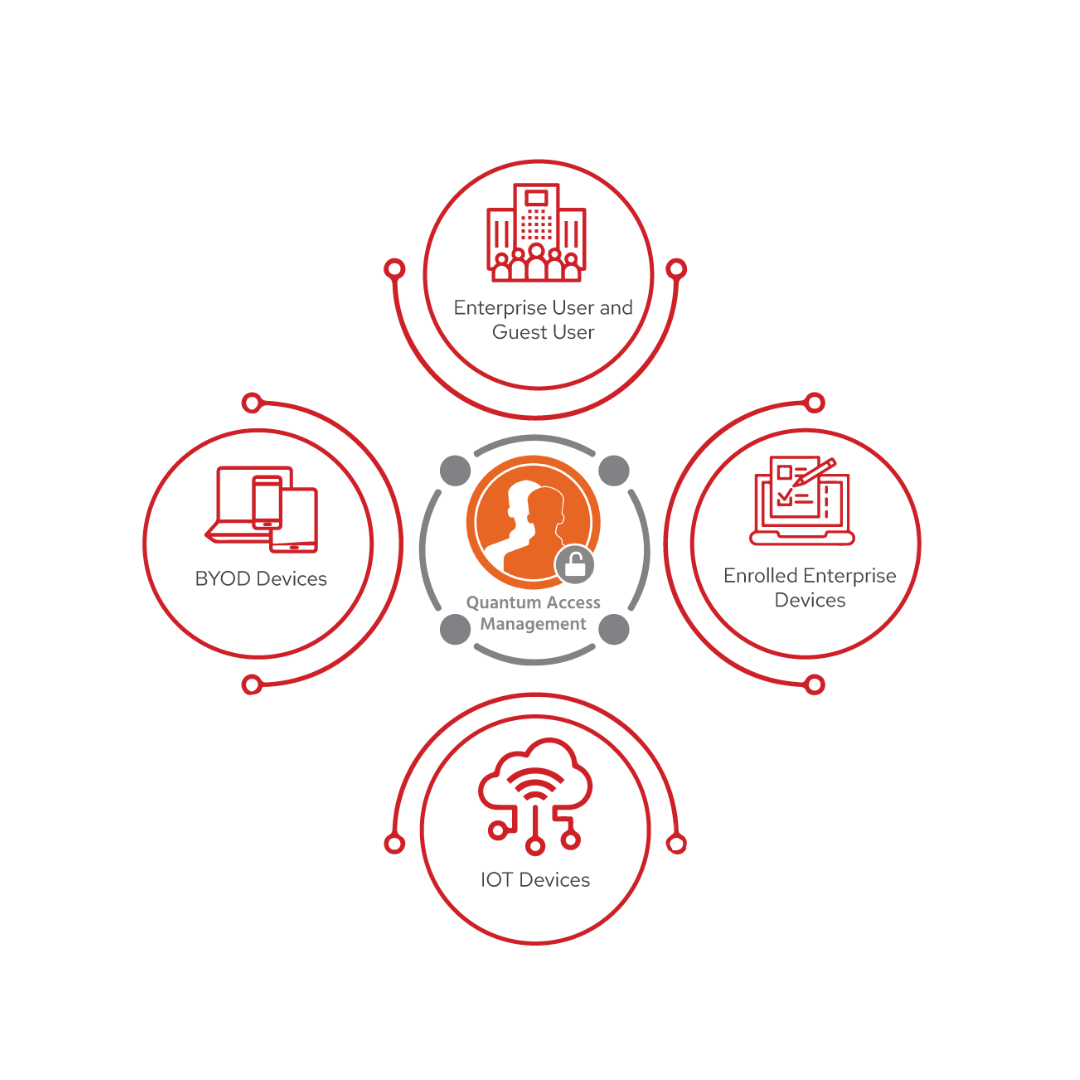
Quantum Access Management (QAM) is a comprehensive solution designed to streamline access control and enhance network security across diverse environments. By centralizing access management, enforcing granular policies, and providing realtime visibility and control, QAM enables organizations to strengthen their security posture, mitigate risks, and ensure compliance with regulatory requirements.
Key Features:
Centralized Access Control:
Unified Access Policies: QAM provides a centralized platform for managing access policies across all network resources, including applications, data, and infrastructure. Administrators can define and enforce granular access policies based on user roles, device types, location, and other contextual attributes, ensuring that only authorized entities can access sensitive information and resources.
Identity and Access Governance:
User Identity Management: QAM offers robust user identity management capabilities, allowing administrators to create, manage, and synchronize user identities across disparate systems and applications. With support for identity federation and single signon (SSO), QAM enables seamless access to resources while ensuring consistent authentication and authorization mechanisms.
RealTime Visibility and Control:
Access Monitoring and Reporting: QAM provides realtime visibility into access activities, allowing administrators to monitor user behavior, detect anomalies, and respond to security incidents proactively. Detailed access logs and audit trails enable organizations to track user activities, investigate security breaches, and demonstrate compliance with regulatory requirements.
Adaptive Access Controls:
Dynamic Access Policies: QAM supports dynamic access policies that adapt to changing security requirements and contextual factors. By leveraging riskbased authentication, contextual access controls, and adaptive authentication mechanisms, QAM ensures that access decisions are based on realtime risk assessments, user behavior analysis, and threat intelligence, reducing the likelihood of unauthorized access and data breaches.
Privileged Access Management (PAM):
Privileged User Management: QAM includes privileged access management (PAM) capabilities to secure access to critical systems and privileged accounts. By implementing least privilege principles, enforcing justintime access, and providing session monitoring and recording, QAM helps organizations mitigate the risks associated with privileged users and insider threats.
Seamless Integration:
APIs and Integration Framework: QAM offers APIs and integration frameworks that enable seamless integration with existing security tools, identity providers, and thirdparty applications. By integrating with SIEM solutions, threat intelligence platforms, and identity governance systems, QAM enhances visibility, automates security workflows, and enables orchestration of access management processes.
Conclusion:
Quantum Access Management (QAM) is a powerful solution that empowers organizations to enforce consistent access controls, strengthen security posture, and ensure compliance with regulatory requirements. By centralizing access management, providing realtime visibility and control, supporting adaptive access controls, and integrating with existing security infrastructure, QAM enables organizations to mitigate risks, protect critical assets, and safeguard against evolving cyber threats. Whether deployed in onpremises, cloud, or hybrid environments, QAM is the ideal solution for organizations looking to enhance their access management capabilities and improve overall security posture.